

Understanding the SuperStrong Assessment
The SuperStrong is a career assessment based on the Strong Interest Inventory, the most widely used interest inventory worldwide and a proven career tool. At Oklahoma State, the SuperStrong is built into the First-Year Seminar curriculum. If you have already completed the assessment, you can view your results at https://vitanavis.com/OSU.
Results reveal your Holland code, which typically includes three letters representing the following themes:
Realistic
“Doers” who often enjoy working with their hands, tools and machinery. They are practical, hands-on and may prefer working with data rather than people.
Investigative
“Thinkers” who are analytical, curious and enjoy solving problems. They often prefer working with data, ideas and concepts.
Artistic
“Creators” who are expressive, imaginative and enjoy working with creative ideas. They are often drawn to activities like art, music, writing and design.
Conventional
“Organizers” who are detail-oriented, structured and enjoy working with rules and procedures. They prefer working with data, numbers and systems.
Enterprising
“Persuaders” who are ambitious, assertive and enjoy leading and influencing others. They may be good at selling, negotiating and taking charge.
Social
“Helpers” who enjoy working with people and helping others. They are often empathetic, friendly and gravitate towards teaching, counseling and social work.
The SuperStrong helps clarify your interests.
Education
SuperStrong helps find majors, certificates and involvement opportunities that align with your interests.
Work
Understanding your unique combination of interests provides insight into potential career paths that may provide long-term satisfaction.
Hobbies
Some interests may show themselves more often in your personal life than in academic and career goals.
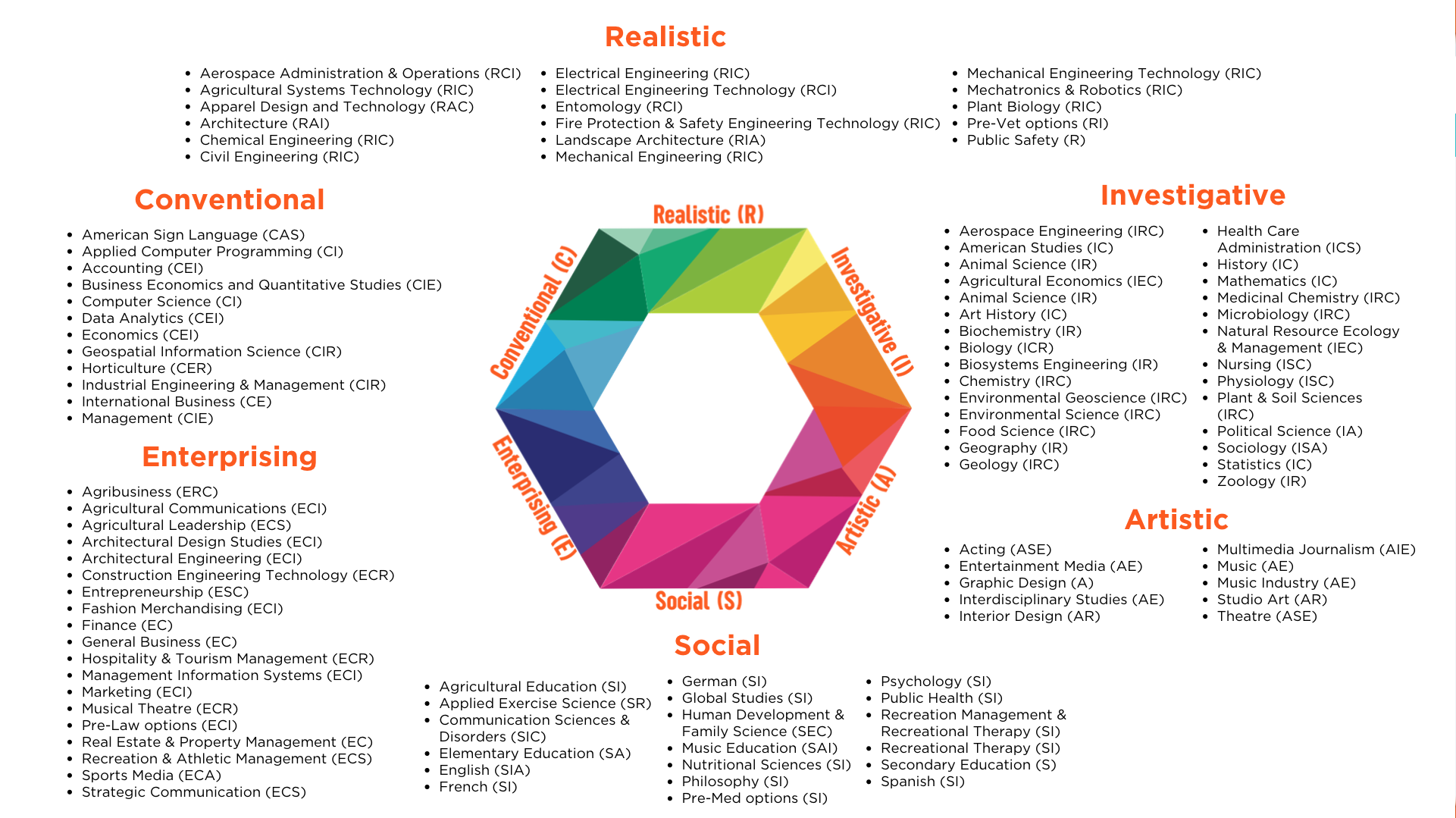
Realistic
Motivators: Fixing things Solving problems Nature | Values Common sense Strength Tradition | Work Environments Outdoors Productive Structured | |
Potential Skills Building Operating tools Repairing | Activities Landscaping and gardening Computer networking and repair Working with machinery | Hobbies Hiking and camping Fishing and hunting Racing and skydiving |
Investigative
Motivators Researching Learning Evaluating | Values Innovation Novelty Achievement | Work Environments Academia Science Medicine |
Potential Skills Technical writing Critical thinking Teaching | Activities Reading Solving complex problems Designing | Hobbies Playing strategy games Listening to public speakers Using computers |
Artistic
Motivators Self-expression Creative ideas Emotion | Values Beauty Individuality Intuition | Work Environments Non-conforming Flexible Indoors |
Potential Skills Playing music Cooking Performing | Activities Creative writing Decorating or conceptualizing Making and sharing art | Hobbies Sketching or painting Attending live performances Dancing, singing or acting |
Social
Motivators Helping Empowering Connecting | Values Communication Relationships Growth | Work Environments Collaborative Supportive Comfortable |
Potential Skills Listening Teaching Understanding | Activities Tutoring Joining clubs Volunteering | Hobbies Using social media Playing team sports Talking to friends |
Enterprising
Motivators Persuading Selling Leading | Values Status Authority Financial success | Work Environments Fast-paced Entrepreneurial Competitive |
Potential Skills Public speaking Organizational strategy Interpersonal communication | Activities Leading student organizations Starting a business Fundraising | Hobbies Making new friends Playing competitive sports Reading business news |
Conventional
Motivators Organizing Processing data Managing information | Values Stability Order Respect | Work Environments Hierarchical Predictable Structured |
Potential Skills Developing processes Maintaining systems Managing finances | Activities Keeping records or scores Web development Visualizing data | Hobbies Playing trivia and board games Researching history Home improvement |